
Omega-3s: what EPA and DHA are
EPA and DHA are omega-3 fats found mostly in fatty fish like salmon, sardines and mackerel. If you don't eat much fish, a fish oil supplement is one way to get them.
EPA, DHA and ALA
There are three main omega-3s. ALA comes from plants like flax and walnuts. EPA and DHA come mainly from fish and seafood. Your body can turn only a small amount of ALA into EPA and DHA, which is why fish and fish oil matter.
How to read a fish oil label
Look past the big 'fish oil' or 'total omega-3' number and find EPA and DHA per serving. That's what you're paying for. Also check the serving size: many brands list two softgels as one serving.
Food first
Eating seafood a couple of times a week is the simplest way to get EPA and DHA. A supplement can fill the gap if you rarely eat fish.
Safety notes
Fish oil is generally well tolerated; the most common complaints are a fishy aftertaste, burps or an upset stomach, which taking it with food can help. If you take blood thinners or other medication, have an upcoming surgery, or have a fish or shellfish allergy, talk to your doctor before taking fish oil.
In our shop: what's in a serving
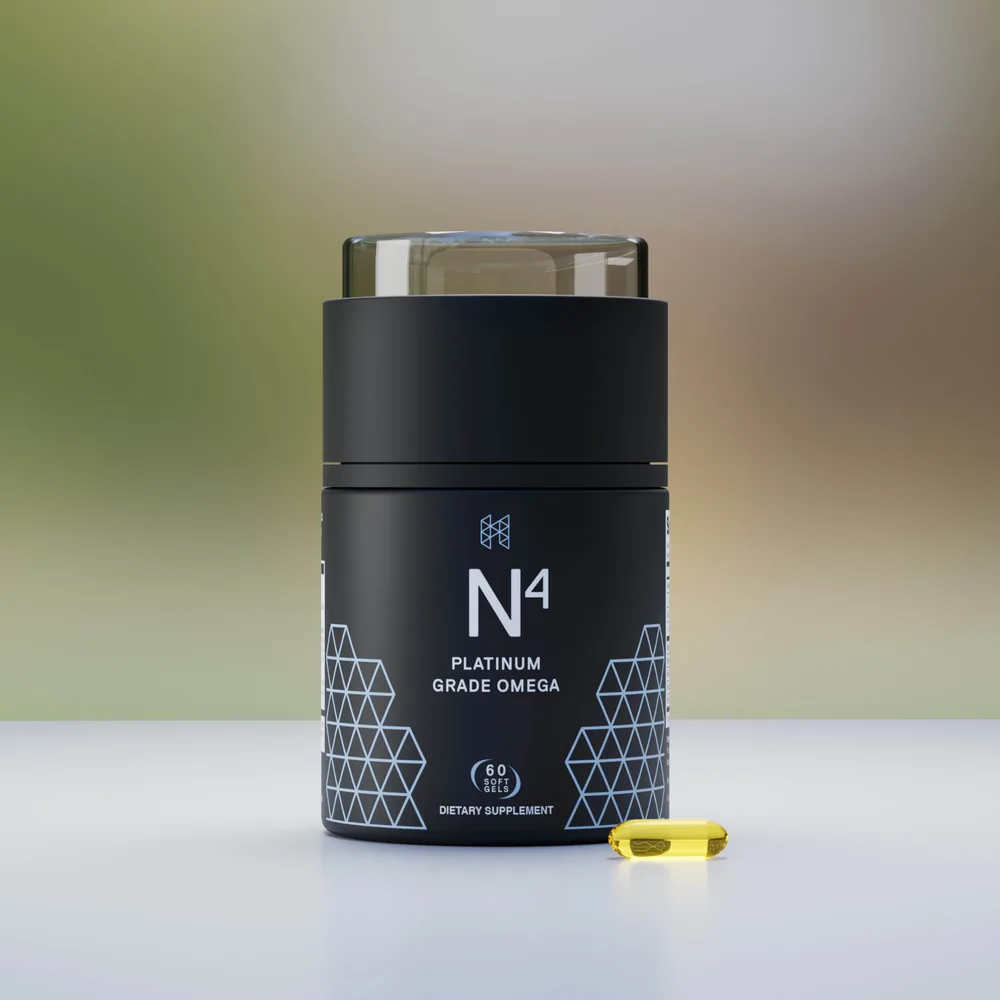
- N4 Platinum Grade Omega: Per 2 softgels: 1,400mg omega-3s, including 720mg EPA and 540mg DHA. Take with food.
Quick answers
How much EPA and DHA is in N4?
720mg EPA and 540mg DHA per serving of 2 softgels (1,400mg total omega-3s).
Should I take fish oil with food?
Yes. N4's label says to take it with food, which also helps with fishy burps.
I'm vegan. Does fish oil work for me?
No. N4 is made from fish oil. Plant sources like flax give you ALA, and algae-based supplements are the vegan route to EPA and DHA.
Sources
- NIH Office of Dietary Supplements. Omega-3 Fatty Acids (consumer fact sheet).
- NIH National Center for Complementary and Integrative Health. Omega-3 Supplements: What You Need To Know.
Keep reading
This guide is general information, not medical advice. These statements have not been evaluated by the FDA. These products are not intended to diagnose, treat, cure, or prevent any disease. Talk to your doctor before starting a supplement, especially if you are pregnant, nursing, take medication or have a medical condition.